Monday, July 9, 2012

Suarez handed Olympic call

Liverpool striker Luis Suarez has been included in Uruguay's 2012 Olympic squad, along with club colleague Sebastian Coates


A strong 18-man line-up also includes Napoli's in-demand forward Edinson Cavani, who continues to be linked with big-money moves to Europe's top clubs.
Suarez, Cavani and Arevalo Rios have been selected as over-age players.
Suarez's involvement at the London Games means he will miss part of Liverpool's pre-season preparations.
The Reds will, however, believe that his involvement in competitive football can only be beneficial to their 2012/13 plans.
Reigning Copa America champions Uruguay are considered to be among the favourites to claim a gold medal this summer.
They have been placed in Group A for the 2012 football tournament and will face the United Arab Emirates, Senegal and hosts Team GB.
Uruguay Olympic squad:
Goalkeepers: Martín Campana, Leandro Gelpi
Defenders: Ramon Arias, Sebastian Coates, Alexis Rolin, Emiliano Albin, Diego Polenta, Matias Aguirregaray
Midfielders: Maximiliano Calzada, Egidio Arevalo Rios, Diego Rodriguez, Gaston Ramirez, Nicolas Lodeiro
Forwards: Luis Suarez, Edinson Cavani, Abel Hernandez, Tabare Viudez, Jonathan Urretaviscaya

Bayern rubbish Pirlo talk

Bayern Munich chairman Karl-Heinz Rummenigge has rubbished reports linking his club with a move for Italy international Andrea Pirlo.


Reports in Italy claimed Bayern had made a bid of 10million euros for the Juventus midfielder, who was a key figure in Italy's Euro 2012 campaign, but Rummenigge says the reports are without foundation.
"FC Bayern have neither made an offer to Juventus, nor have FC Bayern had any contact with the player or his agent," he said in a statement published on the Bundesliga club's website.
Bayern have made six new signings already this summer and are not expected to add any further new faces to their squad for next season.
Xherdan Shaqiri is the only new midfielder, joining the likes of Bastian Schweinsteiger, Thomas Muller, Toni Kroos, Arjen Robben and Franck Ribery in the Bavarians' squad.

Kean hoping Hoilett stays put

Blackburn boss Steve Kean is hopeful that striker Junior Hoilett will pen a new contract with Rovers, having made him a "very good offer".


The 22-year-old has left Ewood Park after his contract expired, but Kean remains confident he will return.
"Junior is out of contract and we've made him a very good offer," Kean told BBC Radio Lancashire. "It's not dead yet.
"If a club in this country signs him, there will be big compensation. We'd like him still to be here but I'm in the dark a little bit."
He added: "When a player runs out of contract, you make him a good offer and he doesn't sign, you fear the worst, but we'll just have to wait and see."
Hoilett hit seven goals in 37 appearances for Rovers last season as the club finished 19th in the Premier League.
The Canadian star has been linked with Newcastle United, Sunderland and QPR, while there is also believed to be interest from abroad, including German side Borussia Monchengladbach.
Meanwhile, Blackburn assistant chief scout Kevin Cruickshank is leaving the club to join QPR.

Viola make Chamakh approach


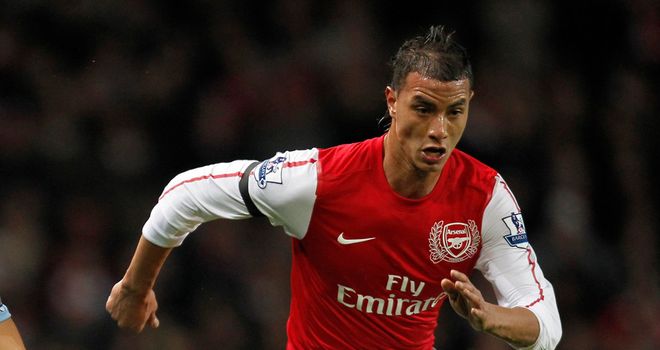
Arsenal boss Arsene Wenger has revealed that Serie A outfit Fiorentina have tabled an offer for Marouane Chamakh.
The Morocco international linked up with the Gunners as a free agent in the summer of 2010.
He netted 11 times in all competitions during his debut season in England, but saw his form fade badly following a bright start.
Chamakh found himself out of favour for much of the 2011/12 campaign, finding the target just once in 19 appearances.
With Arsenal having bolstered their attacking ranks with the signings of Lukas Podolski and Olivier Giroud, the 28-year-old would appear to have tumbled even further down the pecking order.
The Gunners may be tempted to cash in on his services during the current transfer window, with Fiorentina expressing a desire to take the former Bordeaux man to Italy.
"Fiorentina requested information on his availability and made an offer," said Wenger.

Russia to name candidates

The Russian Football Union (RFU) will name the candidates to take charge of their national side as speculation continues over Manchester City's Roberto Mancini.
Reports began to emerge on Saturday that Russia, with the help of oil giants Gazprom, were ready to break the bank to land Mancini.
The RFU was forced to issue a statement on its website over the weekend, denying reports it had already signed a contract with a new coach.
Now they have confirmed that they will announce those under consideration to replace Dick Advocaat, who left the role following Euro 2012.
"Because of numerous reports about the so-called agreed candidates and having former RFU chief (Sergei Fursenko) signing contracts with them, the RFU would like to officially state that at the moment, it has not signed any contracts with any possible candidates," the RFU said.
"Also, on Tuesday, July 10, a list of coaches will be published on the RFU's official website and with whom the RFU will start contract negotiations."
Mancini aside the likes of Fabio Capello, Pep Guardiola and Luciano Spalletti have been linked.

Nobody needs Julio Cesar…

Inter's acquisition of Samir Handanovic last week is generally considered a sensible move, ticking a lot of the right boxes on and off the pitch. He's younger, will earn less and has arguably been in better form over the last two seasons than Julio Cesar, the man he is replacing. Getting him in was easy – Udinese were never likely to turn down any offer that came close to being substantial. Now comes the hard part – getting rid of the Brazilian.
He turns 33 in September and is on €4.5m per year – a salary that not many clubs, if any, are going to want to pay to someone at that age – for two years. So already you are looking at a player that is going to need to take a pay cut when he moves.
That is not something that normally goes down well, but it does sometimes become acceptable if they are moving to clubs of a similar stature where they feel they can compete for trophies – see Mathieu Flamini's eventual begrudging acceptance of a cut from €4m a season to €1.8m at Milan. But how many top clubs are in the market for a goalkeeper? Nobody in England needs one, the Spanish are well covered in this regard and not many of the Italian and German teams have this as a priority.
Milan have popped up as a potential destination, but a new goalkeeper for their squad is not a necessity. The fact they would have to pay a transfer fee plus cover his wages, even if they are reduced, is likely to scupper that move when they have the perfectly serviceable Christian Abbiati of a similar age.
If the top teams are happy with what they have got and not actively seeking a new man between the sticks, Inter are looking at clubs just below this tier – Borussia Dortmund or Valencia perhaps – but Julio Cesar might not be looking at these clubs at all, and in this era where the power is with the players, if he does not want to go there, he will stay put.
And then there is his declining reputation. It was not long ago that he was considered the best in his position – now he would struggle to make the top three. Errors have crept into his game – he made a few in Inter's treble winning season, but they went largely unnoticed due to the team's success.
His mistake at the 2010 World Cup against Holland did not and he has not been the same goalkeeper since. There are slight parallels with fellow Brazilian Dida, who was once one of the best at Milan before hitting a sharp decline. The Rossoneri made the mistake of offering him a long extension on €4m a season, which soon left them stuck with a second and sometimes third choice goalkeeper happy to collect his wages.
Inter are avoiding that trap, actively seeking to move Julio Cesar on earlier than Milan did with Dida, but the combination of factors is not in their favour. The hard-ball stance they have taken until now – leaving him out of pre-season – is only likely to strengthen the ‘keeper’s resolve to stay, as will his large salary. The fact that there are suggestions they may be willing to soften and incorporate him back in the squad suggests they are cottoning on to the lengthy fight they face to sell him.

Elia has Werder Bremen medical

Eljero Elia is on the verge of leaving Juventus after German club Werder Bremen announced that he has passed his medical.
“SV Werder Bremen are close to signing offensive player Elia as the Green-Whites have agreed with the player and Italian club Juventus about all essential points on a transfer,” read a statement on their website.
“A contract signing has not happened yet since there are still final details to be worked out.
“These are more from the club in Italy as they cannot happen until a workday, as confirmed by Werder manager Klaus Allofs on Sunday afternoon.
“Elia, who would likely arrive in Norderney on Monday after an agreement with Juventus, already passed his medical check-up on Sunday morning in Bremen.”
The Dutch winger signed for the current Scudetto winners less than a year ago for €9m following a successful two-year spell at Hamburg.
The midfielder, however, failed to make an impact at Antonio Conte’s side, making just five appearances for the outfit during the entire season.
It appears that Conte’s early season shift from a 4-4-2/4-2-4 to a 4-3-3 and then a 3-5-2 all but negated a spot for the player at the Turin giants.
Elia is set to sign a four-year deal with the German club.

Totti to be used out wide?

Captain Francesco Totti could be used as winger at Roma in 2012-13, confirmed Coach Zdenek Zeman after a 9-0 victory over Val Pusteria on Sunday.
Zeman returned to replace the departing Luis Enrique this summer in what will be his second spell at the club, following a two-year stint from 1997-1999 as the side’s tactician.
When prompted about where he intends to play Totti, Zeman replied that nothing is definite yet. “I’ve not given any indications. I found Totti as a winger [in his first spell with the club] and I think he can play there.
“The players had no specific duties today. I wanted to see how they played together. Today was not a football match,” the summer signing from Pescara noted.
“Overlapping runs are the only thing we tried out today. Some did it better, others worse. We must work, from tomorrow onwards we will begin to try out some methods of play.”
The Czech then talked about two of Roma’s attacking starlets, beginning with Argentine Erik Lamela. “Lamela for me is a winger, an important player with great qualities but he must extract those,” he stated. “He must play more with his teammates.
“Bojan Krkic? I don’t know what people expected from him, but last year he had a good campaign without playing all of the games.
“He’s an interesting player and I hope to have him in the side as soon as possible. Now he’s playing just for himself and I see much confusion in him.
“He scored a good goal [a long-range belter] but that’s not enough. He’s a boy with great quality and he can score many goals,” Zeman concluded.

Pazzini: I’m leaving Inter

Inter striker Giampaolo Pazzini has revealed that he will leave the Nerazzurri this summer.
Speaking at the club’s pre-season training facility in Pinzolo, the Italian international announced that he is not part of the outfit’s plans for the future.
“I think that the club have made their decisions and I believe that I am not part of the project,” he admitted. “I’ll look to work hard in an attempt to change their minds, but I have always been honest and I am being so now too.”
The 27-year-old has signed a four-and-a-half year deal at Inter in January 2011, following a fantastic spell at Sampdoria where his partnership with Antonio Cassano helped lead the side to the Champions League qualification spot for the 2011-2012 season.
Pazzini scored 11 goals in 17 appearances in the second half of the 2010-2011 season for Inter before falling out of form and managing a mere five in 33 appearances last season.
Pazzini is of interest to Sampdoria and may also be targeted by Lazio.

Goal-line technology Q&A


Goal-line technology has finally won approval following a vote by International Football Association Board (IFAB) members in Zurich on Thursday.
There are a few hurdles still to negotiate, but it could be introduced into the English Premier League midway through the 2012-13 season.
Here, BBC Sport asks - and answers - the big questions.
So, after years of debate, is goal-line technology going to be introduced at all matches?
The International Football Association Board voted unanimously in favour of introducing the technology, leaving it up to individual associations to decide whether to implement it into their respective competitions.
Fifa used to be against it, so what changed?
Fifa dropped its long-standing opposition to its introduction in 2010 following Frank Lampard's disallowed goal against Germany at the World Cup in South Africa. His shot hit the bar and bounced down over the line, but a goal was not given by officials. Fifa president Sepp Blatter apologised to the English Football Association (FA) after the incident.
Use accessible player and disable flyout menus
Full Blatter interview on technology
Speaking to BBC Sport this week, Blatter said: "That was the moment for me to say: 'You can't afford for something similar to happen in the next World Cup.' We could say it is a historic day for international football."
So once Fifa changed its stance, how did it go about finding a suitable system?
Eight systems were initially tested by an independent body. Each company had to demonstrate their technology adhered to Fifa benchmarks. These included notification of a goal being sent to the referee's watch within one second of the ball crossing the line and strict standards on accuracy. Two companies proceeded to the second phase of testing.
GoalRef and British-based Hawk-Eye were tested again to check their accuracy in "real-world" scenarios - including in poor weather conditions, while floodlights are being used and when players are moving or standing close to the goal posts. They were both successful.
Tell me more about the two systems that have been approved.
Hawk-Eye's system uses six cameras, focusing on each goal, to track the ball on the pitch. The system's software uses "triangulation" to pinpoint the exact location of the ball. If it crosses the goal-line, an encrypted radio signal is sent to the referee's wristwatch to indicate a goal has been scored. The whole process takes less than a second to complete.
GoalRef uses a microchip implanted in the ball and the use of low magnetic waves around the goal. The system then detects any change in the magnetic field on or behind the goal-line to determine if a goal has been scored. The process takes less than one second, with the result electronically relayed to the referee.
So two companies have been approved - what happens now?
The technology will first be used at December's Fifa Club World Cup and, if successful, at the 2013 Confederations Cup and 2014 World Cup.
The Premier League wants to use it "as soon as practically possible". It will decide, through consultation with member clubs, its preferred system and then make a decision about cost and when to implement it. The Football League will also discuss the matter with its 72 clubs.
Use accessible player and disable flyout menus
John Terry clears the ball
Euro 2012 : Last-ditch John Terry clearance saves England
There are big questions for the FA, including whether the systems would be allowed in the FA Cup. Top-flight clubs could, for example, use goal-line technology for home ties, but it might not be available to teams from lower divisions.
And what about the Champions League? Isn't Uefa against it?
Uefa president Michel Platini believes it is wrong to implement goal-line technology due to the infrequency of goal-line incidents within games. It means there could be a situation where technology is used in Premier League and World Cup games but not the Champions League and Europa League. However, Blatter is confident Platini, who is in favour of using more assistant referees instead, will change his mind.
"He is more afraid that once technology comes in, it will go from the goal-line towards the penalty box or whatever," said Blatter. "But I am sure with this unanimous decision of the international board that he will follow. He cannot go against history and this is new history."
Who is paying for it?
That is another unanswered question. The Premier League is likely to centrally fund it for its member clubs, but what about everybody else? Commercial sponsorship is another possibility and it is believed the Football League could look at that option.
Then there is international competition. England would happily pay for goal-line technology, but a smaller nation may not have the funds or not want it. That is when the issue might become complicated. So England could have it and others would not.
And how much will it cost?
Fifa general secretary Jerome Valcke has estimated the cost to be between £120,000 and £160,000 for each system. However, he said he expects that figure to fall over time.